The Blog
Real talk about money. Budgeting tips, investing basics, and wealth-building strategies for people who feel like they're starting late.

How to Invest Your First $100: A Real Investor's Guide (2025)
I started investing $50 a month while I was $16,000 in debt. Everyone said I should pay off the debt first. Everyone was kind of right - but also kind of wrong. Here's what actually happened: I bought a few shares of Cisco and Nike just to get comfortable with investing. Then I moved to robo-advisors. Then index funds. Year one, I went from negative net worth to $13,000 saved and invested. Now I'm past $200,000 in net worth. The secret? Embarrassingly boring. I just kept putting money in. If you've got $100 and you're wondering if it's even worth investing - yes. It is. If you're worried you're already behind because you didn't start in your twenties - you're not. If you're paralyzed by all the competing advice out there - I get it. I spent six months researching the "perfect" investment strategy before realizing the answer was sitting right in front of me the whole time. Three letters: VTI. By the end of this guide, you'll know exactly where to open an account, what to buy with your $100, and how to actually click the button. No finance degree required. No complicated strategies. Just the same boring approach that took me from $16K in the hole to a six-figure net worth. Let's get you started. The $100 Dilemma: Invest or Pay Off Debt First? (A Simple Decision Tree) This is probably the first question running through your head. You've got $100, but you also have some debt. Credit card, student loans, car payment - something. So what do you do? Here's the simple rule I use: If your debt interest rate is above 7%, pay the debt first. A credit card charging 24% APR will eat your investment returns alive. Math doesn't lie. If your debt interest rate is below 7%, you can do both. Student loans at 5%? Car loan at 4%? You're fine to invest while making minimum payments. Look, here's what happened with me: I had credit card debt at high interest rates AND student loans at lower rates. I attacked the credit cards aggressively. But I also started investing $50 a month on the side. Was it the mathematically optimal choice? Probably not. But here's the thing - I needed to build the investing habit. I needed to see money grow. That psychological win kept me motivated to crush the debt faster. The Decision Tree:Do you have credit card debt above 20% APR?Yes: Pay that off first. All of it. Then invest. No: Move to step 2.Do you have $1,000 in emergency savings?No: Build that first. Even $500 helps. Yes: Move to step 3.Is your remaining debt below 7% interest?Yes: Start investing your $100. Make minimum debt payments. No: Split your money. Half to debt, half to investing.The truth is, there's no perfect answer here. But there is a wrong answer: doing nothing while you research the "optimal" strategy for another six months. Where to Open Your First Investment Account (Without the Overwhelm) You've got two main choices: let someone else manage your money (robo-advisors), or do it yourself (brokerage accounts). Both work. Here's how to decide. Robo-Advisors: Set It and Forget It Robo-advisors automatically invest your money based on your goals and risk tolerance. You answer a few questions, deposit your cash, and they handle the rest. Best for: People who want to invest but don't want to think about it.Platform Annual Fee Minimum What I LikeSoFi Invest 0.25% $50 Low minimum, clean appWealthfront 0.25% $500 Great automation featuresBetterment 0.25% or $4/mo $0 No minimum to startM1 Finance 0% Varies Free, customizable piesThe 0.25% fee means you'd pay $0.25 per year on a $100 investment. That's basically nothing. DIY Brokerages: Full Control If you want to pick exactly what you buy (and pay zero fees), go with a traditional brokerage. Best for: People who want to buy specific ETFs like VTI or VOO.Platform Account Minimum Fractional Shares What I LikeFidelity $0 $1 minimum Best overall, no feesCharles Schwab $0 $5 minimum Great research toolsVanguard $0 Limited Home of VTI and VOOHere's what I'd do with your first $100:Want hands-off? Open a SoFi or Betterment account. Deposit $100. Done. Want control? Open a Fidelity account. It takes about 10 minutes.I use Fidelity for my taxable brokerage account. No complaints. The app works, the fees are zero, and I can buy fractional shares of anything. What to Actually Buy With Your First $100 (Specific Tickers Included) This is where most guides get vague. "Buy index funds!" Okay, but which ones? Let me give you actual tickers. If You Have $100 One Time Put it all in VTI (Vanguard Total Stock Market ETF). That's it. One fund. You now own a tiny piece of over 4,000 US companies - Apple, Microsoft, your local grocery store that went public, all of it. VTI's expense ratio is 0.03%. That means for every $100 invested, you pay 3 cents per year in fees. Three cents. Why VTI over individual stocks? Because picking winners is nearly impossible. Even professional fund managers - people who do this full time - fail to beat the market about 90% of the time. VTI IS the market. Alternative options:VOO (Vanguard S&P 500 ETF) - Just the 500 largest companies SCHD (Schwab US Dividend Equity) - Dividend-focused if you want incomeBut honestly? VTI and forget it. If You Have $100 Per Month to Invest This is where things get exciting. Dollar-cost averaging - fancy term, simple concept. You invest the same amount every month regardless of what the market does. $100 per month into VTI. Every month. Rain or shine. Market up, market down, you keep buying. Here's what that looks like over time (assuming the historical 10% average return of the S&P 500):Timeline Total Contributed Projected Value10 years $12,000 $20,65520 years $24,000 $75,93730 years $36,000 $226,049Read those numbers again. $100 a month for 30 years turns into $226,049. You only put in $36,000 of your own money. The rest - $190,000 - is compound growth. That's the magic. That's why starting now matters more than starting "perfectly." Year one, I hit $13,000 saved and invested. Not because I made brilliant picks. Because I kept showing up. Now I'm past $200K. Same strategy: boring, consistent, automatic. How to Actually Click 'Buy' (Step-by-Step for the Nervous) Knowing what to buy means nothing if you never actually buy it. Here's exactly how to place your first trade on Fidelity (other platforms are similar). Step 1: Open your account Go to Fidelity.com, click "Open an Account," choose "Brokerage Account." You'll need your Social Security number, address, and employer info. Takes about 10 minutes. Step 2: Link your bank Connect your checking account. This lets you transfer money in. Step 3: Transfer $100 Hit "Transfer" and move $100 from your bank. This usually takes 1-3 business days, but many brokers let you trade immediately while the transfer settles. Step 4: Search for VTI In the search bar, type "VTI." Click on it. Step 5: Click "Buy" You'll see a green "Buy" button. Click it. Step 6: Enter your amount Choose "Dollars" instead of "Shares." Type $100. This uses fractional shares - you'll own a piece of VTI even if you can't afford a full share. Step 7: Review and submit Check the details. Click "Submit Order." That's it. You're an investor now. What happens next:Your order executes during market hours (9:30 AM - 4 PM Eastern) You'll own approximately 0.4 shares of VTI (depending on current price) Dividends get deposited quarterly - reinvest them automaticallyWhat Happens After You Hit 'Buy' (Month-by-Month Reality Check) Nobody talks about this part. You invested your $100. Now what? Month 1-3: The Honeymoon Phase You'll check your account constantly. Every day. Sometimes multiple times a day. Your $100 might become $102. You'll feel like a genius. Then it drops to $97 and you'll panic. This is normal. Stop checking so often. Seriously. Month 4-6: Your First Real Dip At some point, the market will drop. Maybe 5%. Maybe 10%. Your $100 becomes $90. Here's what you do: nothing. Absolutely nothing. Keep investing your $100 monthly. You're actually buying shares on sale. This is the hardest part of investing - watching your money temporarily shrink. But every long-term investor goes through it. The S&P 500 has recovered from every single crash in history. Month 7-12: Building the Habit By now, the excitement has worn off. Good. Investing should be boring. Your automatic transfers are running. You're not checking daily anymore. You're just... investing. This is what success looks like. At month 12, you might have $1,200-$1,400 invested (depending on market performance). That's 12x what you started with. And next year, you'll add another $1,200. The snowball is rolling. 5 Mistakes That Tank Your First $100 (I Made #2) Learn from my screw-ups. Mistake #1: Buying Individual Stocks Instead of Index Funds I bought Cisco and Nike with my first investments. Got lucky - they did fine. But I easily could have picked the next Enron. Index funds remove this risk. You own the whole market, not one company's bet. Mistake #2: Panic Selling When the Market Dropped I didn't sell, but I came close. In 2020, I watched my portfolio drop 30% in a month. Every instinct screamed "GET OUT." I didn't. By the end of that year, I was up more than before the crash. If you sell when the market drops, you lock in your losses AND miss the recovery. Don't do it. Mistake #3: Trying to Time the Market "I'll wait until the market dips to invest." Said everyone who missed the last 10 years of gains. Time in the market beats timing the market. Every time. Mistake #4: Neglecting Your Emergency Fund Your $100 investment shouldn't come at the cost of having zero savings. If your car breaks down and you have to sell your investments at a loss to cover it, you've failed. Build a small emergency fund first - even $500-$1,000. Then invest. Mistake #5: Paying High Fees Some funds charge 1% or more in annual fees. That might not sound like much, but over 30 years, high fees can eat 20-30% of your returns. VTI charges 0.03%. That's why I recommend it. When $100 Should Go Into Savings, Not Stocks Investing isn't always the right move. Here's when to choose a high-yield savings account instead: You need the money within 5 years. Saving for a house down payment in 2027? Keep it in savings. The market could crash right before you need the cash. You have zero emergency savings. Life happens. Job loss, medical bills, car repairs. Build 3-6 months of expenses in savings before investing. You're in a high-interest debt emergency. Credit cards at 25% APR? Your $100 is better spent paying that down. The good news: high-yield savings accounts are paying around 5.00% APY right now (January 2026). That's not nothing. Your $100 in a HYSA becomes $105 in a year with zero risk. But for money you won't touch for 10+ years? That belongs in VTI. The 7 Questions Everyone Asks Before Investing $100 Is $100 actually enough to start investing? Yes. With fractional shares, you can invest any amount. $100 buys you a piece of VTI just like $10,000 would - you just own a smaller slice. What's the best investment for $100? A total market index fund like VTI. One purchase gives you diversification across 4,000+ companies. Should I invest or pay off debt first? If your debt is above 7% interest, focus on debt. Below 7%, you can do both. Can I invest $100 in individual stocks? You can, but you shouldn't. Not yet. Index funds are safer for beginners because you're not betting on one company. How much will $100 be worth in 10 years? At the historical 10% average return: about $259. But $100 per month for 10 years becomes $20,655. What if the market crashes right after I invest? Keep investing. Market crashes are buying opportunities. Every crash in history has recovered. Should I use a Roth IRA or regular brokerage account? If you have earned income, a Roth IRA is usually better - your money grows tax-free. But a regular brokerage works too if you want more flexibility. Your Next Move You made it through 3,500 words about investing $100. You know more than most people now. But reading about investing is not the same as investing. The difference between "someone who should invest" and "someone who invests" is one $100 transfer. That's it. One transaction. I spent six months paralyzed by all the options. Don't be me. Open an account today. Transfer your $100. Buy VTI. Set up automatic monthly contributions. Then close the tab and go live your life. The market will do its thing. You don't need to watch. You don't need to stress. You just need to keep showing up - $100 at a time. I started with $50 a month while drowning in $16,000 of debt on a $45,000 salary. Now I'm past $200,000 in net worth. Not because I'm a financial genius. Because I started. Your first $100 isn't going to make you rich tomorrow. But it starts something that will. One transfer. Today. That's your next move.
Meal Prep for Beginners: Week 1 Starter Plan (With Real Costs)
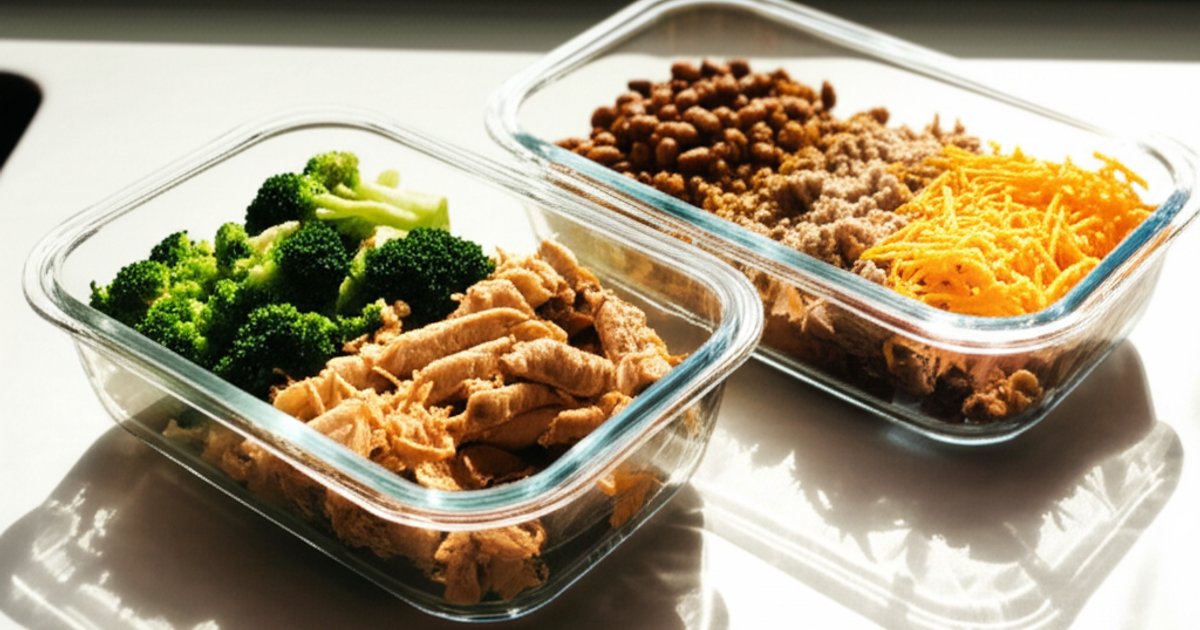
It's 7pm on a Wednesday. You've been up since 6am, made 47 decisions at work, and now you're standing in front of an open fridge full of groceries you swore you'd cook. There's chicken. There's rice. There's... something wilted in a bag. You close the fridge and open DoorDash. Again. I know this loop. I lived it. And when I finally decided to break it, I made every beginner mistake in the book. I tried meal prepping 14 different Instagram-worthy recipes my first week. Color-coded containers. Five different sauces. A grocery bill that looked like I was catering a wedding. I lasted exactly four days before I gave up and went back to ordering $35 burritos at 8pm. Here's what I learned: Meal prep for beginners isn't about perfection. It's about breaking the 7pm decision fatigue cycle that's bleeding your bank account dry. Why Your Groceries Keep Rotting While Your DoorDash Bill Climbs The average American spends $284 per month on food delivery apps. That's $3,408 a year. Not because they love delivery, but because by the time dinner rolls around, they're too exhausted to decide what to cook, let alone actually cook it. This is decision fatigue at work. By 7pm, your brain has made thousands of micro-decisions. What to wear. How to respond to that email. Whether that meeting could've been an email. Your willpower tank is empty. Meal prep isn't about cooking skills or discipline. It's about making the food decision once—on Sunday—so your Wednesday-night self has nothing to figure out. The 4 Meal Prep Styles (Only 1 Works for Beginners) Before you start, here's what actually works when you're new to this: 1. Full Meal Prep (What we're doing) Cook complete meals, portion them out, refrigerate or freeze. Open container, microwave, eat. Best for: Beginners who need zero decisions at mealtime 2. Ingredient Prep Chop vegetables, cook proteins, prep sauces—assemble fresh daily. Best for: Experienced cooks who want variety 3. Batch Cooking Make huge batches of one thing (soups, stews, casseroles). Best for: People comfortable eating the same meal 4+ times 4. Freezer Prep Prep raw ingredients into freezer bags for future cooking. Best for: Planning 2-4 weeks ahead For Week 1, stick with full meal prep. It requires the least daily effort and gives you immediate results. Your Week 1 Starter Plan: 3 Meals, 2.5 Hours, $50-75 Here's the exact plan I recommend for beginners. It's intentionally boring because boring works. What you're making:4 servings of chicken & rice bowls (lunches) 4 servings of turkey taco filling (dinners) 8 hard-boiled eggs (breakfasts/snacks)Total active time: 2.5 hours on Sunday Total cost: $50-75 depending on what you already have Meals covered: 12 (plus eggs for snacks) That works out to roughly $5-6 per meal. Compare that to $15-25 per DoorDash order. Your First Meal Prep Grocery List: $50-75, Nothing Fancy Here's exactly what to buy. I'm using Walmart prices as of January 2026, but adjust for your store. Proteins (~$25)2 lbs boneless skinless chicken breast: $8 1 lb ground turkey (93% lean): $6 1 dozen large eggs: $4 1 can black beans: $1.25 1 can corn: $1.25Carbs (~$8)2 lbs jasmine rice: $4 8 flour tortillas (or corn): $3 1 lb pasta (optional backup): $1Vegetables (~$12)1 bag frozen broccoli: $2.50 1 onion: $0.75 1 bell pepper: $1.50 1 head romaine lettuce: $2.50 2 tomatoes: $2 1 lime: $0.50 1 head garlic: $0.75Pantry Staples (~$10)Olive oil (if you don't have): $5 Taco seasoning packet: $1 Soy sauce (small bottle): $2 Salt & pepper (if needed): $2Optional upgrades (~$5-8)Shredded cheese: $3 Salsa: $3 Greek yogurt (for sour cream substitute): $3Total: $50-75 (less if you have pantry staples)Skip the $200 Gadgets: Here's What You Really Need You don't need a fancy meal prep kit to start. Here's the actual equipment: Essential (you probably have these):1 large skillet or pan 1 pot for rice/boiling eggs Cutting board Chef's knife Measuring cupsThe one purchase I'd make: Glass meal prep containers with lids (12-pack for ~$25 on Amazon). They last forever, don't stain like plastic, and make portion control automatic. Can't afford containers yet? Use whatever you have—mason jars, tupperware, even cleaned takeout containers. Perfect is the enemy of done. The 6-Step Meal Prep Process (2.5 Hours, One Sunday) Here's your exact game plan. I'd suggest starting at 2pm so you're done before dinner. Step 1: Start the Rice and Eggs (5 min active, 30 min passive) Put 2 cups of rice in your rice cooker or pot with 4 cups water. Set it and forget it. Fill another pot with water, add your eggs, bring to a boil. Once boiling, cover and remove from heat. Let sit 12 minutes, then ice bath. While this cooks, move to Step 2. Step 2: Prep Your Vegetables (15 min) Dice the onion. Slice the bell pepper. Mince 4 cloves of garlic. Chop the broccoli if using fresh. Keep everything in separate piles—you'll use them at different times. Step 3: Cook the Chicken (25 min) Season chicken breasts with salt, pepper, and a drizzle of olive oil. Cook in a large skillet over medium-high heat, 6-8 minutes per side until internal temp hits 165°F. Rest for 5 minutes, then slice into strips. Pro tip: Slice chicken while it's resting—the slices cook a bit more from residual heat and stay juicier. Step 4: Make the Taco Meat (20 min) In the same skillet (don't wash it—chicken flavor adds depth), cook ground turkey over medium heat until browned. Add half the diced onion, half the bell pepper, and the taco seasoning packet with 1/2 cup water. Simmer 10 minutes. Add the can of black beans (drained) and can of corn (drained) in the last 2 minutes. Step 5: Steam or Sauté the Broccoli (10 min) If using frozen broccoli, microwave according to package directions. If fresh, sauté in the skillet with a little olive oil, garlic, salt, and pepper for 5-7 minutes until bright green and slightly tender. Step 6: Assemble and Store (20 min) Chicken Rice Bowls (4 containers):1 cup rice per container 4-5 oz sliced chicken per container 1/2 cup broccoli per container Drizzle of soy sauceTaco Bowls (4 containers):1/4 of the taco meat mixture per container Optional: add cheese, salsa, lime when eatingEggs: Peel all 8 eggs. Store in a container in the fridge. You're done. That's 12 meals ready for the week.Foods That Survive in Tupperware (And Don't Turn to Mush) Not everything survives meal prep equally. Here's what holds up: Great for meal prep (3-5 days in fridge):Cooked chicken, turkey, beef Rice, quinoa, pasta Roasted vegetables (broccoli, bell peppers, zucchini) Hard-boiled eggs Bean-based dishes Soups and stewsOkay for 2-3 days:Salads (keep dressing separate) Avocado (add lime juice, store well-sealed) Steamed vegetablesSkip these for weekly prep:Anything with mayo-based dressings Fresh herbs (add day-of) Crispy items (they get soggy) Fish (cook within 1-2 days)How to Reheat Meal Prep (Without Rubber Chicken) This is where most people mess up. Cold, rubbery chicken isn't motivation to keep meal prepping. For rice and grain bowls:Add 1-2 tablespoons of water to the container Cover loosely (leave lid cracked or use paper towel) Microwave at 70% power for 2-3 minutes Stir halfway throughThe water creates steam that rehydrates the rice and keeps chicken from drying out. For taco meat:Transfer to microwave-safe dish Add splash of water or broth Cover and microwave 90 seconds Stir, check temp, add 30 seconds if neededOven method (for crispier results): Preheat to 350°F. Transfer food to oven-safe dish, cover with foil, heat 15-20 minutes. Food Safety 101: Keep It Simple The main rules:2-hour rule: Don't leave cooked food out more than 2 hours Cool before storing: Let food cool 20-30 minutes before refrigerating 4-day rule: Eat refrigerated meal prep within 4 days (freeze the rest) Reheat to 165°F: Use a meat thermometer if you're unsureWhen in doubt, freeze it. Properly stored meal prep lasts 2-3 months in the freezer. 5 Beginner Mistakes That Make You Quit by Week 2 I made all of these. Learn from my failures. Mistake #1: Prepping too many different recipes Week 1 should be 2-3 recipes max. I tried 6 different meals my first week and burned out by Wednesday. Mistake #2: Buying ingredients you've never cooked before This isn't the time to experiment with jackfruit tacos. Stick with proteins you know how to cook. Mistake #3: Not accounting for eating out Plan for 4-5 dinners, not 7. You'll eat out at least once. Build that in. Mistake #4: Forgetting about breakfast Eggs are the easiest solve. Boil a dozen on Sunday. Done. Mistake #5: Making it Instagram-worthy Nobody cares what your containers look like. They care whether you ate the food. Function over aesthetics. The Real Cost vs. Takeout Breakdown Here's what meal prep actually saves you. Without meal prep (my old routine):Breakfast: Coffee shop muffin + coffee: $8 Lunch: Chipotle or similar: $15 Dinner: DoorDash average: $28 (meal + fees + tip) Daily total: $51 Weekly total: $255 (assuming 5 weekdays) Monthly: $1,020+With meal prep:Breakfast: 2 hard-boiled eggs: $0.75 Lunch: Chicken rice bowl: $4.50 Dinner: Taco bowl: $4.50 Daily total: $9.75 Weekly total: ~$50 (plus groceries for weekends) Monthly: ~$350 (including some eating out)Monthly savings: $670+ That's conservative. If you were ordering DoorDash for most meals like I was, you're looking at saving $700-1,000 per month. Want more money-saving tips delivered weekly? Join readers getting practical strategies every Friday. No spam, unsubscribe anytime. Get the Weekly Tips → 3 Easy Starter Recipes (Under $8 Per Serving) Recipe 1: Simple Chicken Rice Bowls Ingredients (4 servings):1.5 lbs chicken breast 2 cups jasmine rice 1 lb broccoli Soy sauce, garlic, olive oilInstructions:Season chicken with salt, pepper, garlic powder Cook in skillet 6-8 min per side Cook rice according to package Steam or sauté broccoli Portion: 1 cup rice, 5 oz chicken, 1/2 cup broccoli per containerCost per serving: $4.50 Recipe 2: Turkey Taco Bowls Ingredients (4 servings):1 lb ground turkey 1 can black beans 1 can corn Taco seasoning Optional: cheese, salsa, tortillasInstructions:Brown turkey in skillet Add taco seasoning + 1/2 cup water Add drained beans and corn Simmer 10 minutes Portion into containers, add toppings when eatingCost per serving: $3.75 Recipe 3: Mediterranean Chickpea Bowls Ingredients (4 servings):2 cans chickpeas 1 cucumber 2 tomatoes 1/4 red onion Feta cheese Olive oil, lemon, oreganoInstructions:Drain and rinse chickpeas Dice cucumber, tomatoes, onion Toss with olive oil, lemon juice, oregano Add crumbled feta Stores well 4-5 daysCost per serving: $3.25 What Success Looks Like: Week 1 Goals Time for realistic expectations. Success in Week 1 is NOT:Perfect containers Zero takeout Eating every meal you prepped Posting on InstagramSuccess in Week 1 IS:Prepping on Sunday (even if just 1-2 meals) Eating at least 5 of your prepped meals Spending less than you normally would Not throwing away all your groceriesThat's it. If you eat 5 prepped meals and save $30 compared to your normal week, Week 1 is a win. The Bottom Line Meal prep isn't about being a chef or having willpower. It's about making one decision on Sunday so you don't have to make 15 decisions throughout the week. Start smaller than you think you should. Two recipes. Twelve meals. $50-75. If you eat 8 of those 12 meals and save $100 this week, you've won. Do that for a month, and you're looking at $400+ back in your pocket. That's money that could go toward your emergency fund, your debt payoff, or start investing with just $100. The best time to start was last week. The second best time is this Sunday.Your move: This Sunday at 2pm, make the chicken and taco recipes above. That's it. Don't overcomplicate it. See how it feels. Adjust from there. And if you want more tips like this delivered to your inbox, join the newsletter.